Proof of Stake vs Proof of Work in 2025
In 2024, losses to DeFi hacks soared to $4.1 billion, marking a major concern for the cryptocurrency community. As we approach 2025, understanding the consensus mechanisms that underpin cryptocurrencies has never been more critical. The debate between Proof of Stake (PoS) and Proof of Work (PoW) intensifies, as both methods claim to secure networks while offering unique advantages and disadvantages.
The Rise of Proof of Stake
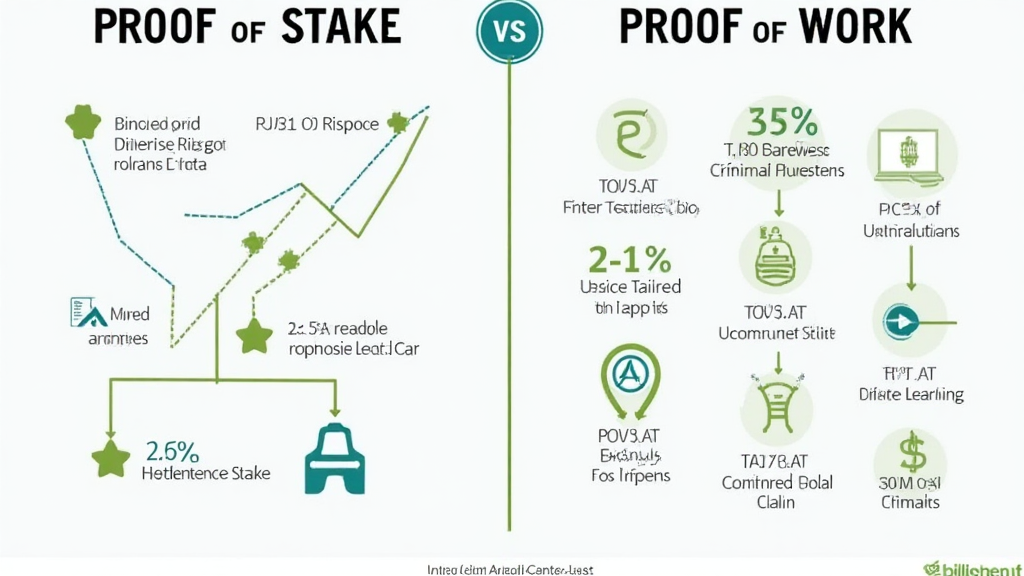
Proof of Stake is increasingly being recognized for its energy efficiency and scalability. Unlike Proof of Work, which relies on computational power to validate transactions, PoS allows validators to create new blocks based on the number of coins they hold and are willing to ‘stake’ as collateral.
- ong>Energy Efficient:ong> PoS uses significantly less energy compared to PoW, which has a substantial impact on the environmental footprint of blockchain technology.
- ong>Scalability:ong> PoS networks can process transactions much more quickly, accommodating a growing number of users.
- ong>Security Features:ong> Validators have a vested interest in maintaining network integrity; bad actors can lose their stake as punishment.
The Continued Relevance of Proof of Work
Despite PoS’s advantages, PoW remains a prevalent consensus mechanism, especially for Bitcoin, the first and largest cryptocurrency. It involves complex mathematical problems that require substantial computational resources and energy.

- ong>Security through Decentralization:ong> PoW networks are generally more decentralized, as anyone can participate in mining, which secures the network against single points of failure.
- ong>Proven Track Record:ong> With its long history of uptime and security, PoW is viewed as a more tested method for maintaining transaction integrity.
- ong>Resistance to Attack:ong> PoW networks require a majority of computational power to be breached, making attacks costly and complex for potential adversaries.
Comparison of PoS and PoW
In 2025, the debate over PoS and PoW will likely continue to revolve around several core issues:
- ong>Energy Consumption:ong> PoW is often criticized for its high energy requirements, while PoS champions a sustainable path.
- ong>Market Adoption:ong> Increasing numbers of projects are transitioning to PoS, influencing future trends in blockchain technology. ong>In Vietnam alone, user growth in crypto owners has surged by 45%, signaling potential for PoS adoption.ong>
- ong>Regulatory Frameworks:ong> As governments worldwide develop guidelines, PoW and PoS will be scrutinized differently, impacting their adoption and evolution.
Future Prospects for Consensus Mechanisms
As we look toward 2025, it’s crucial to consider the innovations likely to emerge in the blockchain sector:
- ong>Hybrid Models:ong> Some projects might adopt hybrid consensus mechanisms that combine the strengths of both PoW and PoS, enhancing security while maintaining efficiency.
- ong>Increased Regulatory Clarity:ong> Greater clarity from authorities may influence the ideal consensus mechanism for various projects in different regions.
- ong>Focus on Security Standards:ong> With ongoing hacks, there’s a growing demand for security measures, spurring the development of the ong>tiêu chuẩn an ninh blockchainong>.
Real-World Application and Impact
The implications of choosing between Proof of Stake and Proof of Work extend far beyond individual projects:
- ong>Investment Strategies:ong> Investors may prioritize projects with lower energy consumption and higher transaction speed as the crypto market matures.
- ong>Business Adoption:ong> Enterprises might gravitate toward PoS systems due to their economic benefits, influencing how cryptocurrencies are integrated into the business world.
- ong>Technological Evolution:ong> Continuous improvements in blockchain technologies will drive increased efficiency and security.
Conclusion: The Future is Bright for Both Mechanisms
As we venture deeper into 2025, the rivalry between Proof of Stake and Proof of Work persists, but both frameworks have roles to play in the evolution of blockchain technology. Users, investors, and developers must stay informed about these consensus mechanisms and choose wisely according to their goals and values.
In summary, each blockchain system continues to evolve, responding to community needs, regulatory requirements, and technological changes. Don‘t forget to keep an eye on future developments and consider how these changes might shape your investment strategies.
Not financial advice. Always consult with a professional before making investment decisions.
For more insights on cryptocurrency, visit cryptocoinnewstoday.