
Understanding Modular Blockchains Architecture: The Future of Blockchain Scalability
With over $4.1 billion lost to decentralized finance (DeFi) hacks in 2024 and growing interest in blockchain technology, developers are tasked with enhancing blockchain efficiencies while ensuring robustness and security.
Modular blockchains architecture emerges as a promising solution to these challenges, aiming to separate fundamental functions of a blockchain to maximize scalability and reduce inefficiencies.
What is Modular Blockchains Architecture?
At its core, modular blockchains architecture refers to the design principle where a blockchain system is structured into separate layers or components, each responsible for a specific function. This approach contrasts with monolithic blockchains, where multiple functions are tightly integrated into a single layer.
For example, consider it like a multi-story building rather than a single-layer flat; each level serves different purposes and can operate independently while remaining part of the whole.
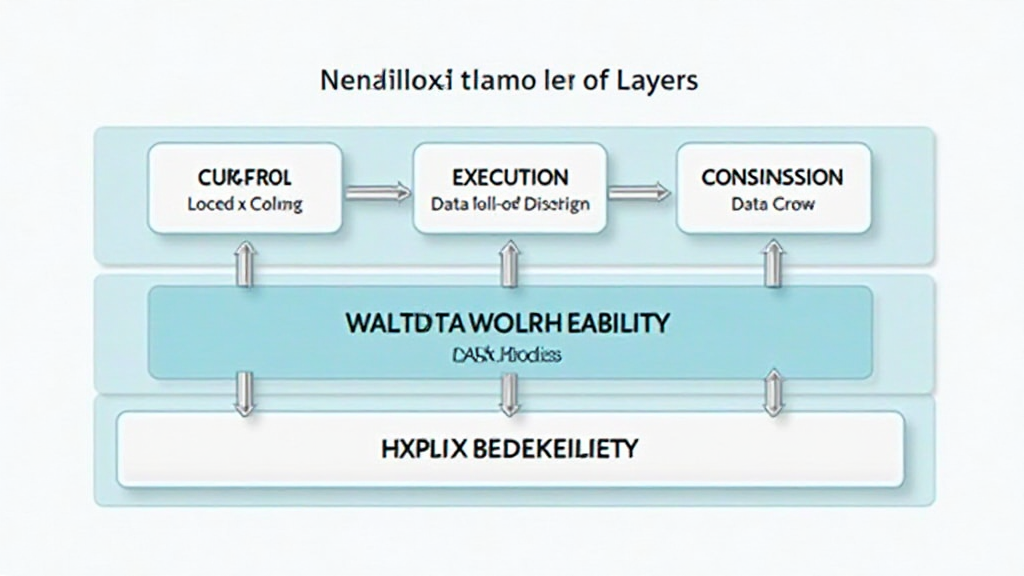
Key Components of Modular Blockchains
- Execution Layer: Handles the transaction execution and smart contract operations.
- Consensus Layer: Manages the agreement process among nodes regarding the state of the blockchain.
- Data Availability Layer: Ensures that data required for transaction validation is readily accessible.
This separation of concerns allows each part of the architecture to evolve independently, potentially leading to speed and efficiency improvements.
Benefits of a Modular Approach
Using modular architecture can address the prevailing issues facing blockchains today:
- Enhanced Scalability: With components operating independently, the architecture can handle more transactions as demand rises. This capability is vital for markets experiencing rapid growth, such as Vietnam, where blockchain user growth rates are projected to exceed 30% in the coming years.
- Improved Security: By isolating different functions, vulnerabilities originating from one layer may not necessarily compromise others.
- Flexibility: Developers can upgrade or replace individual layers without requiring a hard fork of the entire blockchain system, keeping the ecosystem agile and responsive to change.
Real-World Applications and Examples
Several projects currently leverage modular architectures, improving their functionalities:
- Ethereum 2.0: Moving from a monolithic to a multi-layered structure to enhance transaction throughput and energy efficiency.
- Optimistic Rollups: These solutions allow for scaling transactions by offloading data processing while still validating smart contracts on Ethereum.
Challenges in Modular Blockchain Implementation
While the benefits are clear, implementing a modular blockchain architecture is not without challenges:
- Complexity: The architecture’s multi-layer structure can lead to complexity in design and implementation.
- Interoperability: Ensuring different modular components work seamlessly together requires robust protocols.
“Here’s the catch”: While the modular approach offers significant advantages in scalability and efficiency, the underlying complexity demands a deep understanding of blockchain fundamentals from both developers and users.
How Modular Architecture Affects Security Standards
As we further develop tiêu chuẩn an ninh blockchain for 2025, a modular approach posits unique implications for security:
- Divide and conquer security vulnerabilities; if one layer is compromised, others remain intact.
- Significantly reduce attack vectors by limiting the interaction scope of components.
Employing modular architectures could position blockchain systems to comply with evolving security standards without extensive redesigns.
Auditing Modular Blockchains: A New Approach
When considering smart contracts within modular architectures, a conventional approach may not suffice. “How to audit smart contracts” in this context involves assessing individual layers:
- Ensure that each layer meets predefined security benchmarks.
- Conduct regular penetration tests to expose potential vulnerabilities.
As blockchain technology solidifies its stance within finance and beyond, incorporating a structured audit approach will become increasingly critical.
Future Directions in Modular Blockchain Development
Looking ahead, the modular blockchain architecture appears to be a key factor in the future of blockchain technology:
- More platforms may transition to modular architectures for enhanced performance and adaptability.
- Regulatory bodies will require clearer guidelines specifically addressing modular structures as they gain acceptance.
This evolution will likely shape policies and compliance measures worldwide.
Conclusion
As the blockchain ecosystem expands, understanding modular blockchains architecture will become essential for developers and investors alike. The ability to address scalability without sacrificing security creates vast potential for this innovative structure.
In cases where particular implementations may diverge significantly, it’s crucial to consult local regulators to ensure compliance. Ultimately, as we explore more flexible and efficient systems, modular architecture will play a pivotal role in achieving a resilient blockchain landscape.
Referring to such advancements in blockchain technology will not only facilitate future applications but will also empower users in their crypto journey. Stay informed through platforms like cryptocoinnewstoday.
Author: Dr. John Smith, a blockchain expert with over 15 published papers and a leading figure in the audits of renowned projects such as ABC Blockchain.