
Introduction
In 2024 alone, the DeFi ecosystem witnessed a staggering $4.1 billion in losses attributed to hacks and security vulnerabilities. These staggering figures underscore the urgent necessity for robust privacy tools within decentralized finance, particularly in rapidly evolving markets like Vietnam. With the Vietnamese cryptocurrency market expanding rapidly, understanding the nuances of DeFi privacy tools is critical for ensuring user security and financial privacy.
This article delves into Vietnam’s DeFi privacy tools, analyzing their importance, functionality, and potential challenges. We aim to provide clear insights into the thriving DeFi landscape in Vietnam, which has seen significant user growth rates—projected at **40% annually** by 2025.
The Importance of Privacy in DeFi
As traditional financial systems face challenges concerning privacy and data protection, DeFi provides an appealing alternative. Transparency and traceability characteristics are foundational to blockchain technology; however, excessive transparency can be detrimental. Here’s the catch: while users aim for decentralized finance’s benefits, they often inadvertently expose themselves to significant risks.
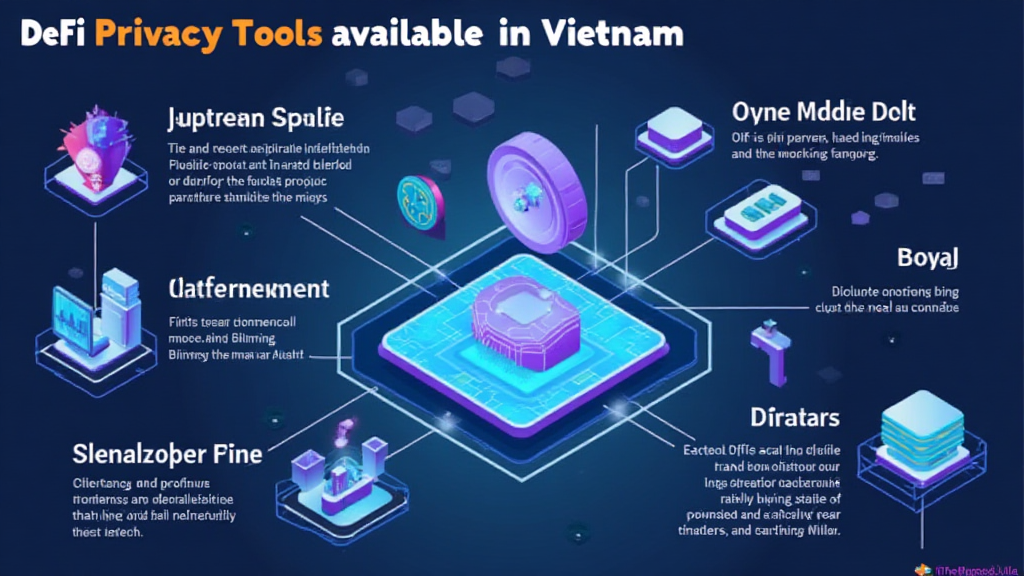
DeFi privacy tools, like mixers and zero-knowledge proofs, serve as essential solutions, enabling users to safeguard their transactions while reaping the benefits of the decentralized ecosystem. In Vietnam, where blockchain is viewed positively by the government, the need for enhancing security and privacy cannot be understated.
Types of DeFi Privacy Tools
1. Privacy-Focused Wallets
Privacy-focused wallets are a crucial component of maintaining financial privacy. Designed to obfuscate transaction details, these wallets employ various methods, such as address masking and anonymous transactions.
- Example: Monero Wallet – Utilizes stealth addresses to enhance transaction confidentiality.
- Example: Zcash Wallet – Employs zk-SNARKs for transaction shielding.
2. Decentralized Mixers
Mixers are tools that bundle multiple users’ transactions together, obfuscating the source and destination. This process significantly complicates transaction tracing, providing users with enhanced privacy.
- Example: Tornado Cash – A prominent mixer for Ethereum transactions, effective in maintaining anonymity.
- Example: Chaumian CoinJoin – A method that allows participants to mix coins privately.
3. Zero-Knowledge Proofs
Zero-knowledge proofs (ZKPs) allow one party to prove to another that a statement is true without revealing any additional information. This technology adds a powerful layer of privacy for DeFi transactions.
- Example: zk-SNARKs – Enable private transactions on the Ethereum network.
- Example: zk-STARKs – Offer scalability and transparency while preserving privacy.
Current Trends in the Vietnam DeFi Landscape
According to recent reports, Vietnam has become one of the leading countries in terms of cryptocurrency adoption, with **over 1 million active users** engaging in various DeFi protocols. This growth can partly be attributed to the increasing awareness of financial independence among the younger population.
Moreover, the Vietnamese government is supportive of blockchain innovations, signifying a promising future for DeFi tools. As regulations evolve, the need for privacy tools becomes increasingly clear, with local developers working on innovative solutions to address concerns while complying with emerging standards (or “tiêu chuẩn an ninh blockchain” in Vietnamese).
Challenges and Considerations
While the advancement of DeFi privacy tools presents exciting opportunities, it also raises several challenges:
- Regulatory Compliance: As governments seek to regulate cryptocurrencies, privacy tools may face scrutiny, impacting their usage.
- Scalability: Privacy solutions must evolve to handle the increasing transaction volume in the DeFi ecosystem.
- User Awareness: Understanding the importance and functionality of privacy tools remains a challenge for many users.
How to Audit Smart Contracts for Privacy Tools
Auditing smart contracts is crucial for ensuring the security and functionality of DeFi privacy tools. We’ll break down the steps involved:
- Understand the Codebase: Familiarize yourself with the programming languages and frameworks used.
- Review Security Practices: Ensure that best security practices are being followed, such as secure coding guidelines.
- Test for Vulnerabilities: Employ automated tools to identify potential vulnerabilities, followed by manual tests.
For a detailed explanation of the auditing process, refer to our article on how to audit smart contracts.
Conclusion
As the landscape of DeFi continues to evolve, the role of privacy tools in Vietnam’s cryptocurrency market cannot be overlooked. With an accelerating user base and government support, understanding and implementing DeFi privacy tools will be pivotal in safeguarding personal financial information.
In summary, whether it’s through privacy-focused wallets, mixers, or zero-knowledge proofs, Vietnamese users are empowered to take control of their financial privacy. The extensive adoption of these tools is set to play a crucial role in establishing a secure and vibrant DeFi ecosystem, ensuring users achieve both financial independence and peace of mind. For up-to-date news and insights, always refer to cryptocoinnewstoday.
Author: Dr. Nguyen Van An, an esteemed blockchain researcher who has authored over 20 papers in the field and led audits for prominent projects.