
Understanding Blockchain Scalability Issues: Key Challenges and Solutions
With the rise of cryptocurrencies and decentralized applications, scalability has become a pressing concern. Various reports indicate that more than $4.1 billion has been lost due to DeFi hacks in 2024 alone, highlighting an urgent need for improved systems. This article delves into the core of blockchain scalability issues, providing insights and solutions that can help bolster the cryptocurrency landscape.
What Are Blockchain Scalability Issues?
At its core, blockchain scalability refers to a blockchain network’s ability to handle an increasing number of transactions and users without compromising its performance and security. As networks like Bitcoin and Ethereum gain popularity, they often face congestion, leading to delayed transaction times and higher fees. It’s a dilemma akin to a bustling bank where customers are left waiting in long queues.
Key Factors Affecting Scalability
Solutions to Enhance Scalability
Addressing blockchain scalability requires innovative approaches. Let’s take a look at some promising solutions.
Layer 2 Solutions
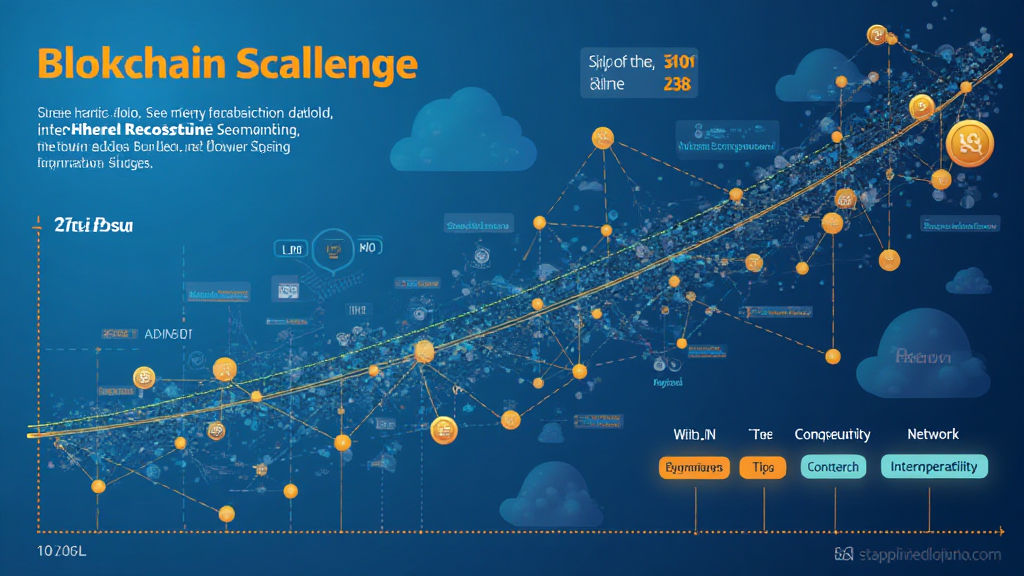
Layer 2 solutions are protocols designed to operate atop existing blockchains, facilitating faster transactions. A prominent example is the Lightning Network for Bitcoin, which enables off-chain transactions. These transactions are processed off the main blockchain, significantly enhancing speed and reducing costs.
Sharding
Sharding is a method of partitioning a database into smaller, more manageable pieces, or “shards.” This approach allows networks to process multiple transactions in parallel, vastly improving throughput. Ethereum 2.0 has committed to implementing sharding to address its scalability challenges.
Improving Consensus Algorithms
Blockchain networks primarily rely on consensus algorithms to validate transactions. Proof of Work (PoW) is widely used but is energy-intensive and slow. Alternatives like Proof of Stake (PoS) offer more efficient validation methods. Switching to PoS can drastically increase the number of transactions a network can handle.
Real-World Applications and Data Solutions
Integrating blockchain solutions into specific industries can optimize scalability. For instance, digital identity verification can improve the efficiency of transactions. According to Chainalysis, implementing these solutions can lead to a 70% reduction in processing times.
Case Study: Vietnam’s Growing Blockchain Ecosystem
Vietnam has witnessed a rapid expansion in its cryptocurrency user base, with an annual user growth rate of around 25%. This boom calls for solutions to address scalability issues. Implementing Layer 2 and sharding in Vietnam’s emerging blockchain projects could enhance user experiences and facilitate broader adoption.
Local Blockchain Initiatives
Future Prospects for Scalability Solutions
The future of blockchain scalability hinges on ongoing research, development, and community collaboration. Industry leaders are actively seeking strategies to combat existing challenges. Innovations such as cross-chain technology, allowing communication between different blockchain networks, present promising future avenues for scalability.
Looking Ahead
As we approach 2025, scalability will remain a hot topic in the blockchain community. The need for secure, effective, and efficient solutions is paramount. With anticipated user growth and use cases in industries like finance, healthcare, and logistics, solving these issues is not just an option but a necessity.
Conclusion
In summary, blockchain scalability issues present both a challenge and an opportunity for the crypto space. Exploring solutions like Layer 2 technologies, sharding, and enhanced consensus algorithms will pave the way for a sustainable future in blockchain. As the Vietnamese market grows, it’s essential for local initiatives to adopt strategies that address these key scalability concerns.
To stay updated on such critical blockchain developments, visit
<