
Introduction
In recent years, the cryptocurrency world has witnessed a dramatic shift in the way transactions are processed. With Bitcoin and Ethereum leading the charge, the limitations of these blockchains are becoming increasingly apparent. That’s where Blockchain Layer 2 Platforms come into play. But what exactly are they, and why are they important?
Data from Blockchain.com shows that Ethereum transactions have skyrocketed in number, often reaching upwards of 1.5 million daily transactions. Unfortunately, the network has struggled to keep up, leading to high fees and slower confirmation times. Layer 2 solutions aim to solve these issues, providing scalability without sacrificing security or decentralization.
This article will delve into Blockchain Layer 2 Platforms, their significance, features, and the future landscape of cryptocurrency.
What Are Blockchain Layer 2 Platforms?
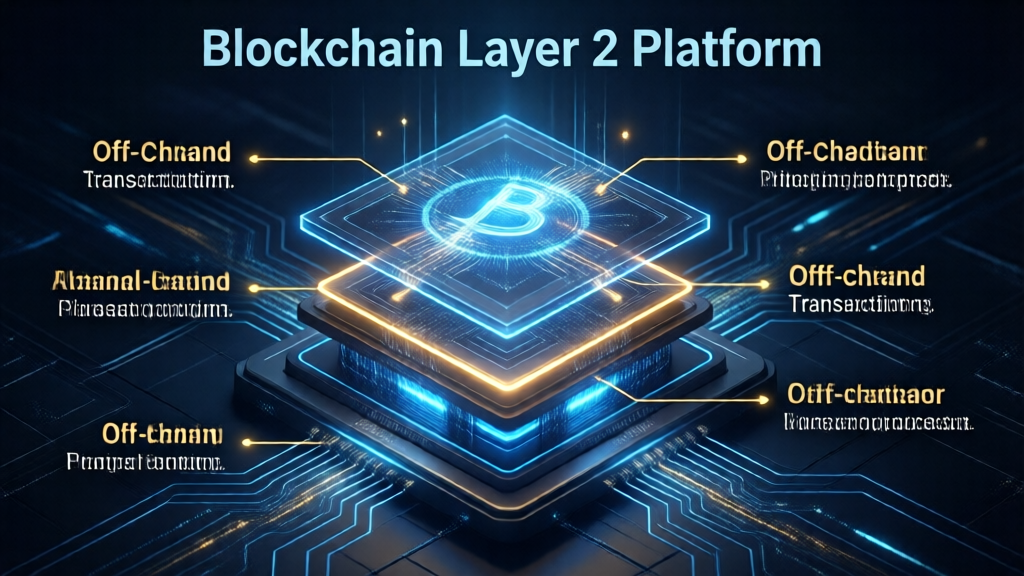
Blockchain Layer 2 Platforms are technology solutions built on top of existing blockchains (Layer 1) to enhance their functionality. They act as an auxiliary protocol, enabling faster transactions and greater scalability by processing transactions off-chain while maintaining the security of the main blockchain.
How Do They Work?
- Transactions are executed on Layer 2 and are bundled together.
- These bundles are periodically settled to the main blockchain.
- This reduces congestion and allows for quicker transaction speeds.
To illustrate, think of Layer 2 as a highway overlaid on a busy street (Layer 1). The main street can be overloaded, but the highway accommodates more cars without restricting the traffic flow below.
Popular Blockchain Layer 2 Platforms
Several Layer 2 solutions have gained traction lately, each with unique features. Here are some of the most notable:
- Polygon (MATIC): Enhances Ethereum’s scaling, offering lower fees and faster transactions.
- Optimism: A Layer 2 scaling solution that uses optimistic rollups to increase throughput.
- Arbitrum: Similar to Optimism, it handles transactions off-chain while being secure.
The Benefits of Blockchain Layer 2 Platforms
Blockchain Layer 2 Platforms provide various benefits that enhance their utility in the crypto ecosystem:
- Increased Scalability: Ability to handle more transactions simultaneously.
- Reduced Fees: Transaction costs are significantly lower due to less congestion.
- Faster Transactions: Users can enjoy quicker confirmation times.
For example, according to a report by Statista, processing costs on Ethereum have averaged as high as 60 Gwei, whereas some Layer 2 platforms allow transactions for under 1 Gwei.
Real-World Applications of Layer 2 Platforms
Businesses are starting to tap into the advantages Layer 2 offers. For example, decentralized finance (DeFi) platforms are integrating Layer 2 solutions to manage user transactions better, allowing for seamless trading experiences.
Challenges Facing Layer 2 Solutions
Despite their benefits, Blockchain Layer 2 Platforms also face challenges:
- Complex Integration: Integrating these solutions requires technical expertise.
- Security Concerns: Off-chain solutions can sometimes introduce vulnerabilities.
- Lack of Standardization: Different platforms may not interoperate efficiently.
The Future of Blockchain Layer 2 Platforms
As the crypto industry continues to expand, the role of Layer 2 solutions will undoubtedly evolve. Analysts predict that by 2025, blockchain transaction costs could decrease by up to 80% as Layer 2 adoption grows. This significant reduction will open up blockchain technology to new users and applications.
Looking at projections from Grand View Research, the blockchain market is expected to reach a value of over $67 billion by 2026.
Conclusion
To sum up, Blockchain Layer 2 Platforms play a crucial role in mitigating the challenges faced by blockchains. They enhance scalability, reduce costs, and facilitate faster transactions, paving the way for a more efficient cryptocurrency landscape.
As we continue to witness growth and adaptation in the crypto world, it’s evident that Layer 2 solutions will be essential in shaping its future. Whether you’re a developer seeking efficient scaling solutions or a user looking for cost-effective transactions, Blockchain Layer 2 Platforms are something to watch closely.
For more insights and updates on cryptocurrency technologies, visit cryptocoinnewstoday.